
Los Angeles has two construction problems that feed each other. The city needs housing faster than traditional methods deliver it. It also needs housing cheaper than traditional methods produce it. Modular construction in Los Angeles is one of the few approaches that addresses both simultaneously. The Modular Building Institute defines modular construction as building off-site, under controlled plant conditions, using the same materials and meeting the same codes as conventionally built facilities — but in roughly half the time. Two recent Los Angeles projects have moved that definition from theory to completed buildings. Substrata Construction tracks this method closely. Here is what developers, owners, and contractors need to understand before committing to off-site construction on their next project.
What Is Modular Construction? Factory-Built vs. Traditional Stick-Build
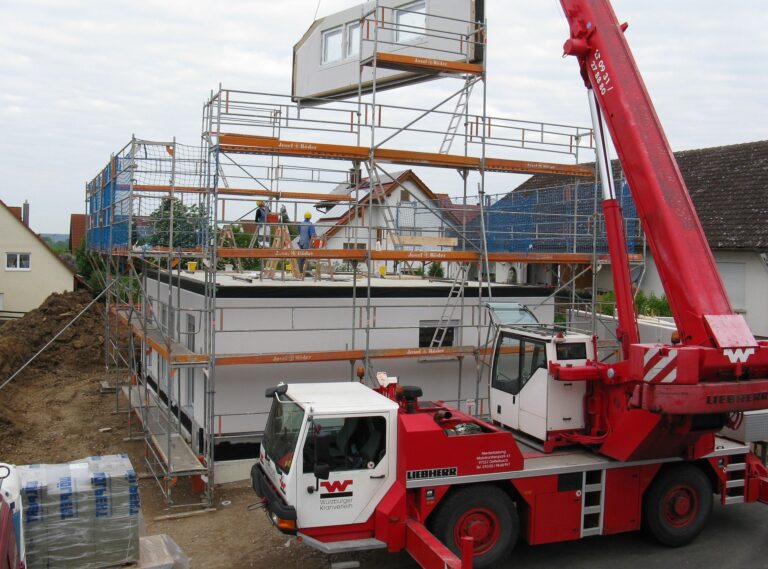
Traditional construction builds everything on site. Every wall, floor, and ceiling assembly goes up in place — exposed to weather, dependent on sequential trade scheduling, and constrained by site access. Modular construction reverses that sequence. Modules are built in a factory, shipped to the site, and stacked or assembled by crane.
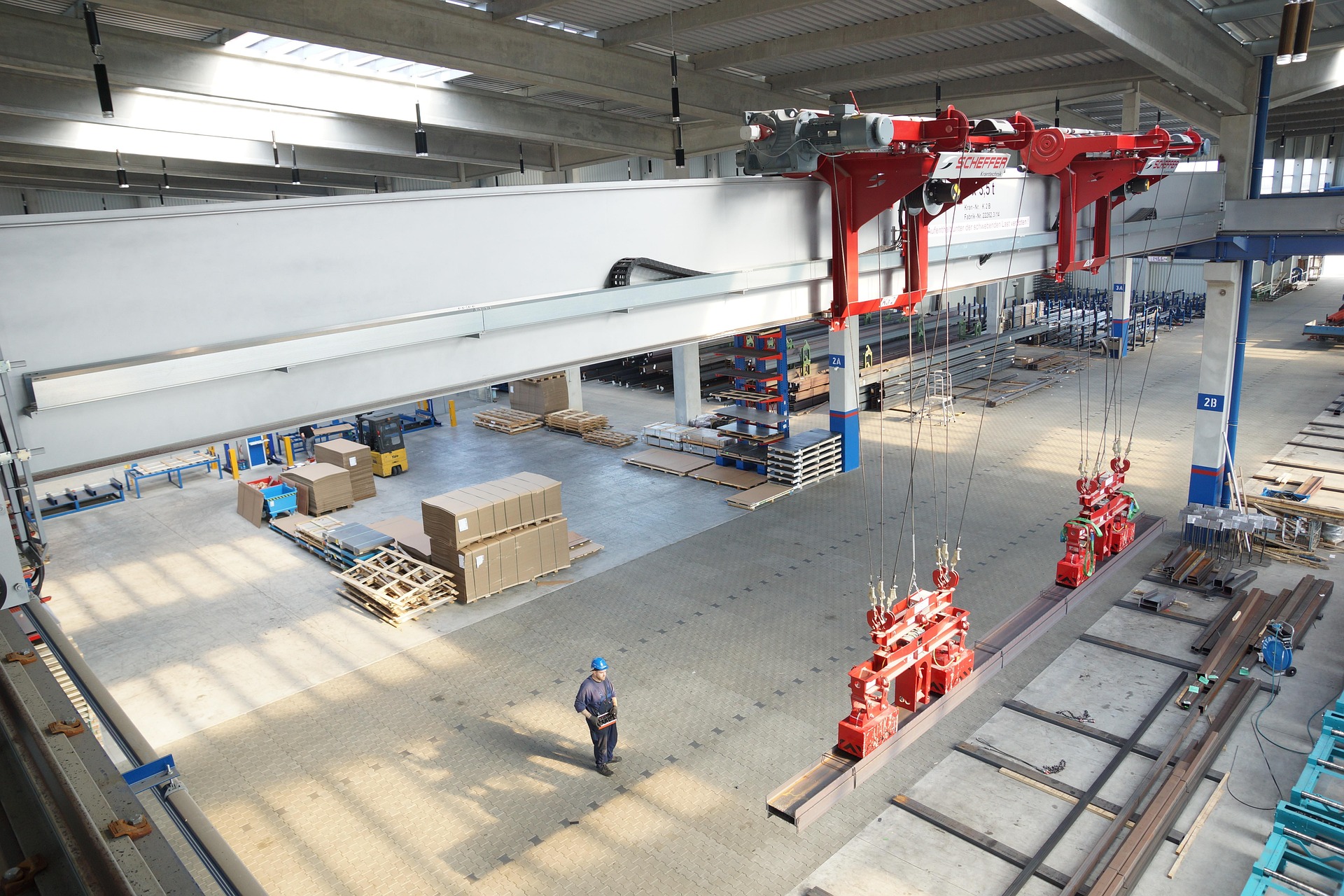
According to the Modular Building Institute, 60 to 90% of the construction is completed inside the factory. The factory environment eliminates weather delays. It also allows simultaneous site preparation and module fabrication — the two phases run in parallel rather than sequentially. Consequently, projects can complete 30 to 50% sooner than traditional construction.
The structural argument is also clear. Each module is independently engineered to withstand the rigors of transportation and craning onto foundations. Once assembled and sealed, the modules become one integrated wall, floor, and roof assembly. Structurally, modular buildings are generally stronger than comparable site-built construction — not weaker. Furthermore, removing approximately 80% of construction activity from the site significantly reduces site disruption, vehicular traffic, and construction hazards. For constrained urban infill sites in Los Angeles, that reduction is not a benefit — it is a requirement.
Prefabricated commercial buildings and modular multifamily developments qualify for the same building codes and architect-specified materials as conventional construction. The finished product is, in most cases, visually indistinguishable from its site-built equivalent.
LA Success Stories: Two Projects That Prove the Model
The Parkline — Chinatown
The Parkline at 1457 N. Main Street in Chinatown is a six-story, 376-unit modular apartment complex designed by AO and developed by Thrive Living, completed in 2026. The building contains studios, junior one-bedrooms, and one-bedrooms. It also includes 6,448 square feet of ground-floor commercial space. Thrive Living set aside 42 units for extremely low-income households and targeted the remaining units to renters earning up to 80% of the area median income.
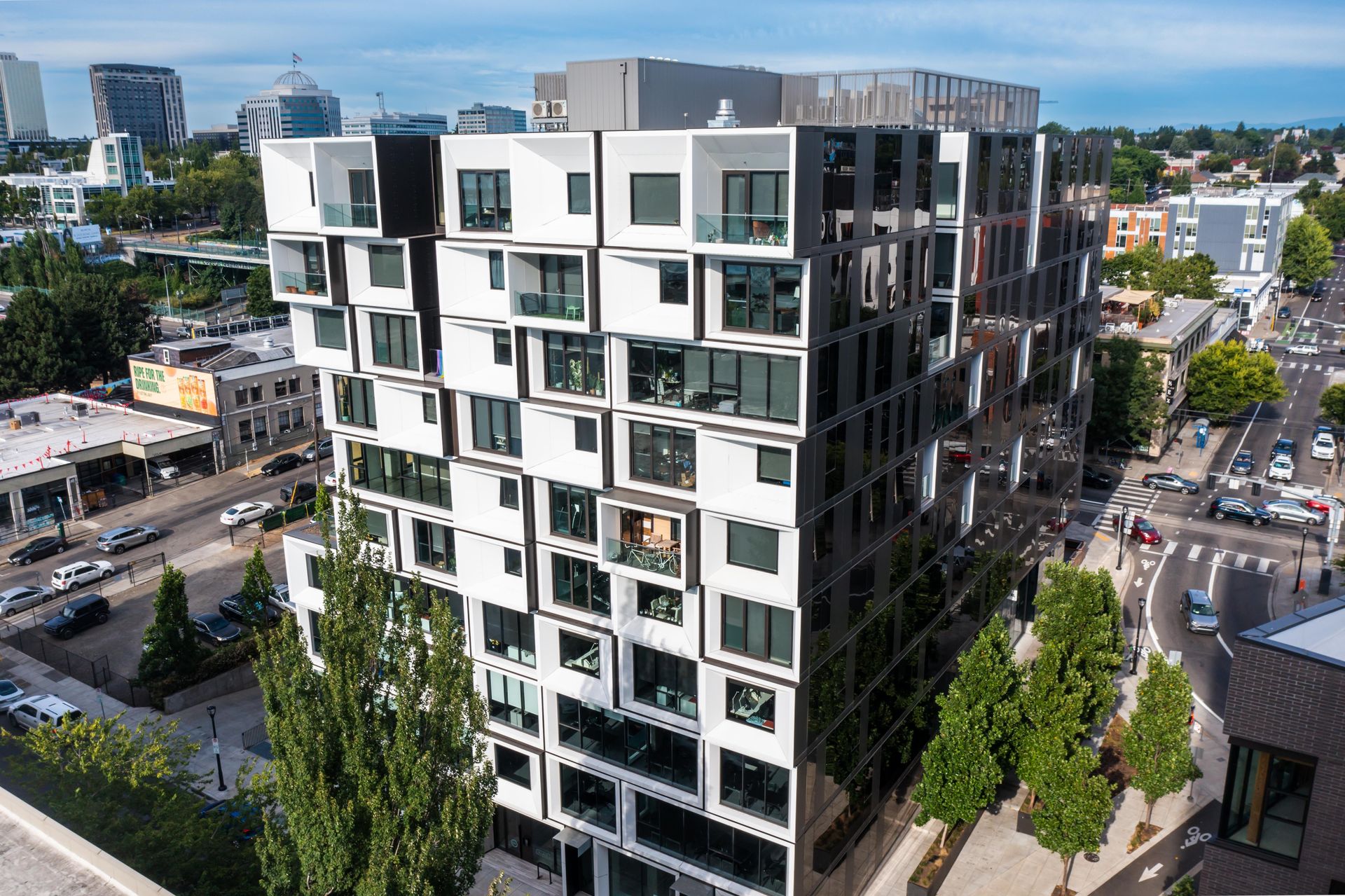
AO’s use of modular construction reduced overall project costs by 15%. AO partner Ioanna Magiati described the impact directly: “By leveraging modular design and construction, we’ve not only minimized disruption to the surrounding neighborhood but also accelerated the timeline, allowing these vital homes to become available quickly so the community can immediately benefit from this project.”
The Parkline also delivers 376 units with only 82 parking spaces — made possible by its transit-oriented location near Los Angeles State Historic Park. Earlier LA zoning could have required between 376 and 564 parking spaces for the same project. The combination of modular delivery and TOC incentives produced a project that addresses density, affordability, and speed simultaneously.
SoLa Impact — South Los Angeles
SoLa Impact and its manufacturing subsidiary Model/Z completed a five-story, 66-unit affordable housing building at 6200 S. Broadway in Florence in June 2026. The entire building was constructed from modules manufactured off-site at Model/Z’s factory in the Watts neighborhood of Los Angeles. The modular installation process — which would have taken up to 10 months using traditional methods — was completed in 10 days. The full project delivered in under 12 months.
Additionally, SoLa Impact secured a $34.8 million construction loan for a 188-unit modular development at 4301 S. Vermont Avenue in Vermont Square — all affordable, built from Model/Z prefabricated units using Executive Directive 1 streamlining and density bonus incentives. Furthermore, the Los Angeles City Council approved an exclusive negotiating agreement with SoLa Impact to develop a 175,000-square-foot modular manufacturing campus on a nine-acre city-owned site in South LA. The proposed Honeycomb campus would produce modular housing units directly in the neighborhoods where the units are needed most.
Advantages: Schedule Compression, Waste Reduction, Quality Control
The case for modular multifamily LA development rests on three compounding advantages.
Schedule compression is the most cited benefit. Modular construction can complete projects 30 to 50% sooner than traditional construction. In a market where construction financing carries costs that accumulate daily, faster delivery translates directly into lower project costs. The SoLa Broadway project proved this at scale — 12 months total versus the 24 months a comparable stick-built project would require.
Waste reduction is equally significant. Factory construction generates less waste by recycling materials, controlling inventory, and protecting building materials. On urban LA sites where waste hauling is expensive and space for dumpsters is constrained, the reduction in site waste is both a cost benefit and a logistics benefit.
Quality control distinguishes factory production from site construction in a specific way. Manufacturing plants run stringent QA/QC programs with independent inspection and testing protocols throughout the production process. Inspectors review quality at every stage in the factory — not only at municipal inspection milestones. Moreover, the factory environment eliminates the moisture-trapping risk that plagues framed construction during California’s wet-season builds.
Challenges: Logistics, Permitting, and Financing
Modular construction in Los Angeles is not a simple plug-and-play alternative to traditional building. Three specific challenges require direct planning.
Logistics and Transportation
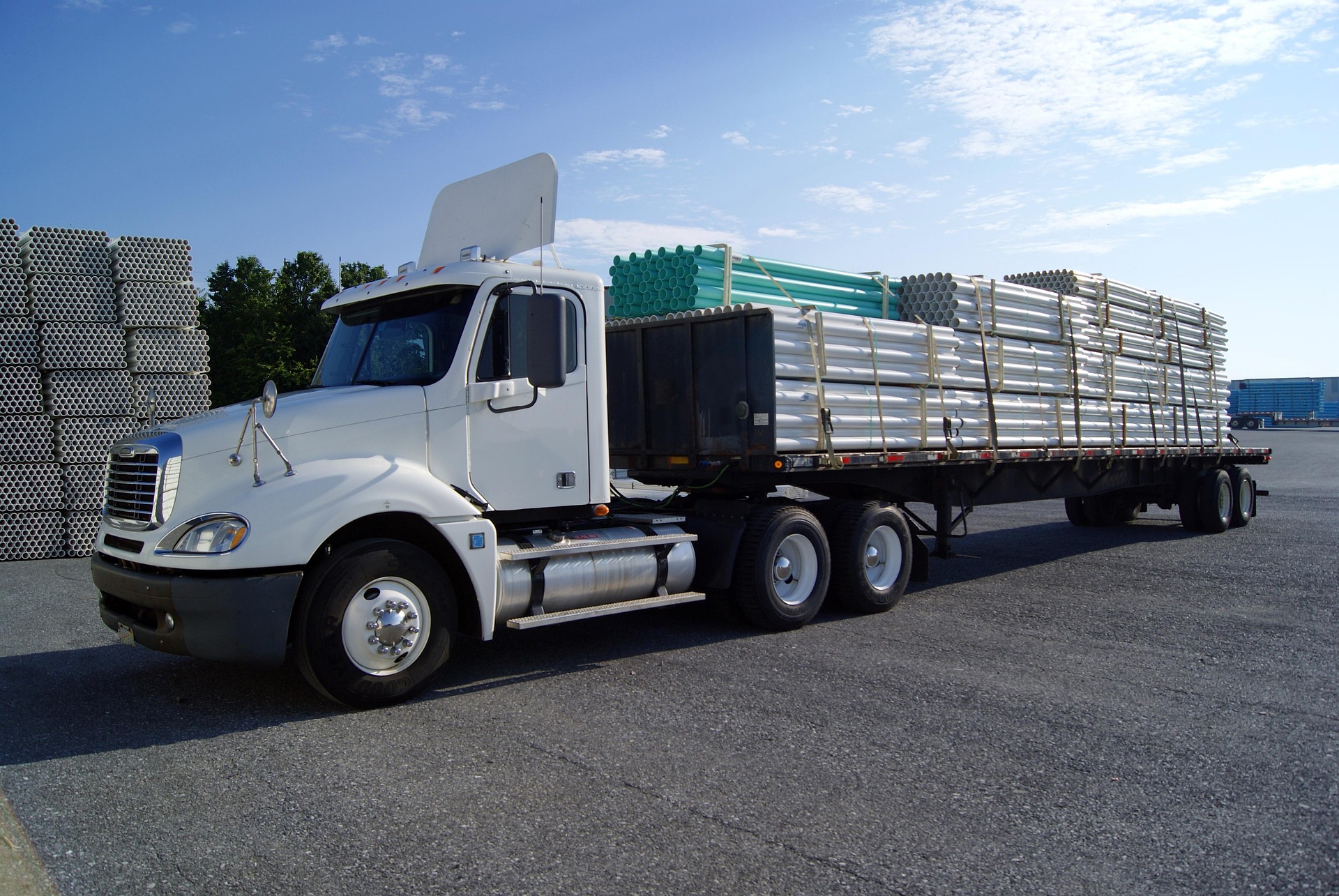
Modular units often exceed standard legal road limits. Modules wider than 14 feet or taller than 13 feet 6 inches require oversize-load permits, route surveys, and escort vehicles. In dense Los Angeles neighborhoods — where streets are narrow and overhead utilities are common — route planning must happen during preconstruction, not after modules are built.
Tight access roads, low wires, bridge restrictions, and insufficient staging space all create transportation complications that are much cheaper to solve before a factory starts cutting steel than after modules are sitting in a yard waiting for a cleared route. Crane coordination must also synchronize with module delivery — a mismatch between crane availability and truck arrival is a direct schedule risk.
Permitting
Modular projects in California use a dual permitting path. Factory-built modules receive state approval from the California Department of Housing during manufacturing. Additionally, the project requires a local building permit from LADBS for site work, foundation, utilities, and assembly. State agencies reported a 20 to 30% increase in modular project volume in 2025. Backlogs are growing as a result. A missing structural drawing or load calculation at submittal sends the application to the back of the queue. Furthermore, oversize-load transportation permits require separate coordination with Caltrans — a process that must start well before modules leave the factory.
Financing
Because a large share of modular construction costs is incurred in the factory before modules reach the final site, lenders must structure atypical draw schedules. Traditional construction draws are tied to on-site progress milestones. Modular projects require draws against factory production — a structure many conventional lenders are unfamiliar with. Developers who approach conventional lenders without experience in off-site construction financing often face delays, modified loan structures, or rejections based on unfamiliarity rather than risk. Working with lenders who have prior modular project experience is not optional on a tight delivery schedule. It is a precondition for keeping the construction loan aligned with the factory timeline.
Conclusion: Modular Is Moving From Niche to Mainstream in LA
The Parkline and SoLa Impact’s South LA projects confirm what the data suggests. Modular construction in Los Angeles is no longer a fringe delivery method. It is a viable, code-compliant, cost-effective approach to the housing and commercial development problem the city faces. The 30 to 50% schedule compression is real. The 15% cost reduction on The Parkline is documented. The 10-day stacking timeline on the Broadway project is confirmed.
The challenges are equally real. Logistics require preconstruction planning. Permitting requires early dual-track submissions. Financing requires lenders who understand factory draw schedules. None of these challenges are fatal to a well-managed project. All of them punish teams that plan for them late.
Substrata Construction approaches prefabricated commercial building projects with the same execution discipline applied to conventional construction. The methodology changes. The standard does not.
Ready to evaluate off-site construction for your next Los Angeles project? Contact Substrata to discuss your project scope and how our construction expertise delivers modular and conventional builds to the same performance standard.


