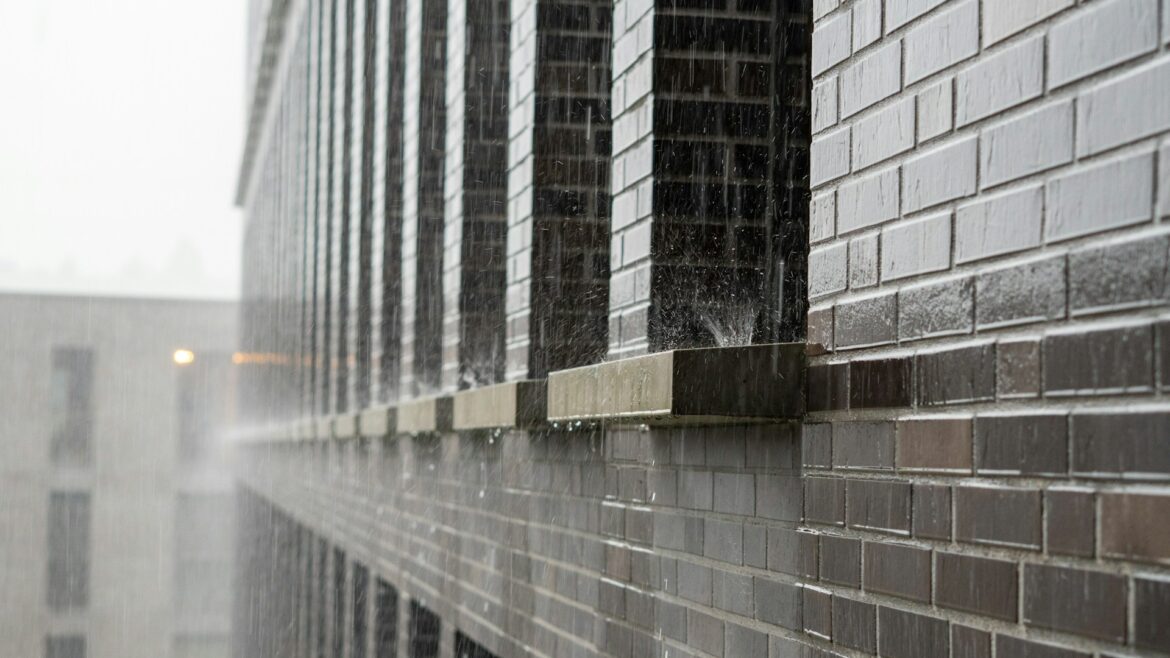
Commercial building moisture control rarely gets attention until the smell arrives. Picture a fictional Los Angeles office on a Monday morning after a weekend atmospheric river. Staff walk in and notice a musty odor near the north wall. A ceiling tile carries a faint tan ring. Nobody saw a leak, and nobody heard running water.
The office is invented, but the weather is real. Los Angeles collected 2.75 inches of rain in under 48 hours during a November 2025 storm, which exceeds three Novembers of normal rainfall. Meanwhile, EPA states that the key to mold control is moisture control. Water rarely announces itself. It hides inside assemblies, spreads for days, and finally shows up as a smell.
Substrata Construction builds and repairs commercial buildings where that pattern costs owners real money. This guide covers where moisture comes from, how each building system fails, and how to stop problems early.
Commercial Building Moisture Control Starts With the Sources
Moisture enters from outside and from inside. Rain, groundwater, and humid air arrive through the envelope. Pipes, drains, and equipment release water from within. Therefore, effective commercial building moisture control must address both directions at once.
Insurance data shows how the sources rank. Chubb’s global claims breakdown attributes about 15% of commercial water damage to roof leaks and another 15% to toilets. Sprinkler malfunctions account for 14%, and HVAC units cause about 8%. Furthermore, The Hartford’s data, reported by Risk & Insurance, ties 75% of water damage losses to accidental discharges from plumbing, HVAC systems, and appliances. As a result, commercial building water damage frequently starts inside the building rather than outside it.
EPA organizes the problem into six control points: site drainage, foundations, walls, roof and ceiling assemblies, plumbing, and HVAC. The guidance also includes verification tests and checklists. Consequently, owners and contractors can confirm that the work actually performs. The next section walks through each system.
Commercial Building Moisture Control by Building System
Roofs and the Building Envelope in Los Angeles
Flat and low-slope roofs dominate commercial buildings in Southern California. Local roofing contractors flag ponding water, seam failures, clogged drains, and leaks at HVAC penetrations, skylights, and parapets as the main storm risks. Additionally, flat roofs trap water at parapet transitions.
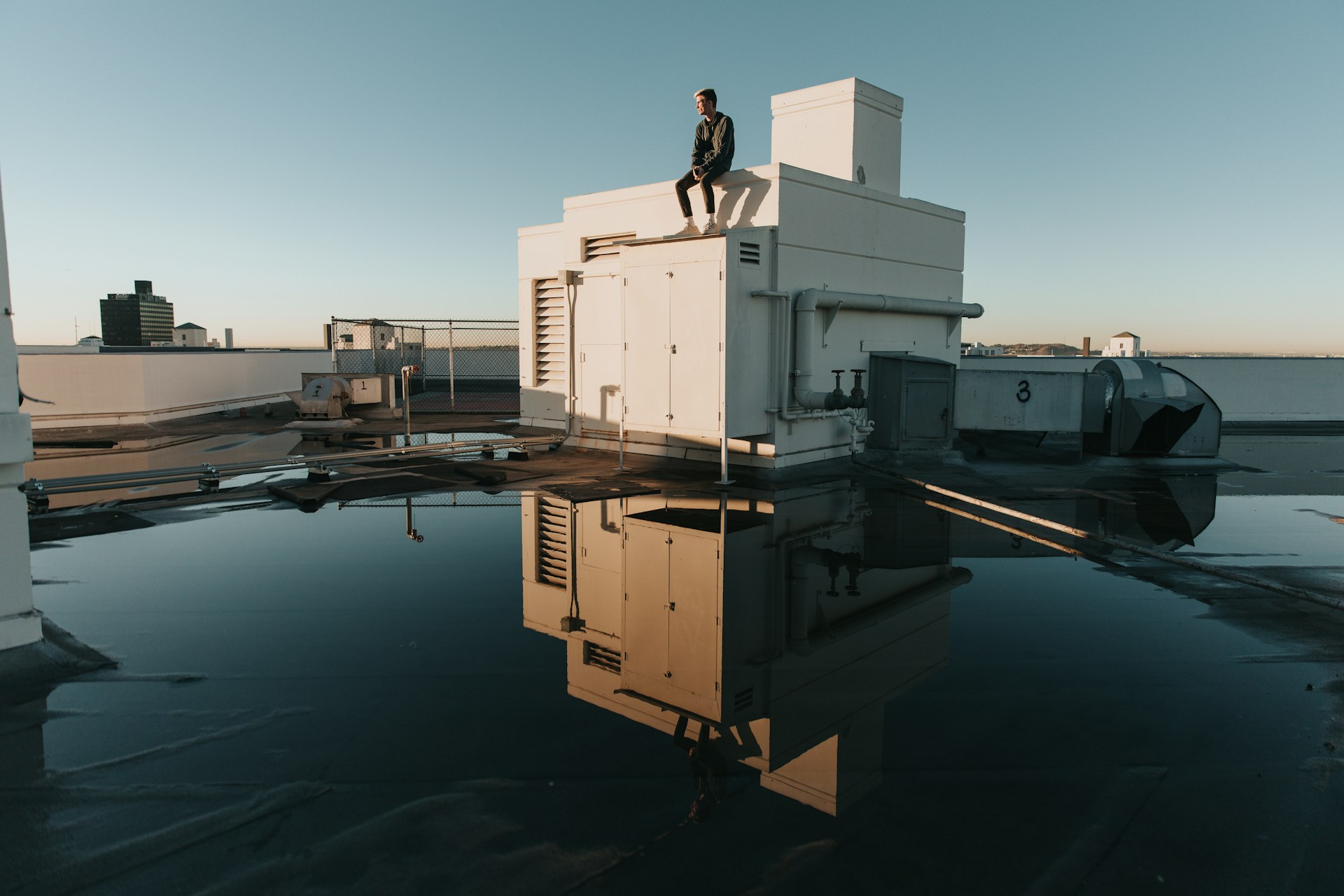
Atmospheric rivers expose weaknesses that build up during dry weather, such as cracked sealants, clogged drainage, and failed flashing. Consequently, a roof that looks fine in September can fail in the first big storm. Roof leaks also lead ceiling water damage, so Chubb recommends regular roof inspections and maintenance.
Walls deserve equal scrutiny. Stucco resists water but does not block it completely. Water that gets behind it needs a path out. However, EPA warns that vapor barriers can keep damp materials from drying fast enough to prevent mold. Storm winds can also drive rain horizontally through windows, vent openings, and roof penetrations.
Strong building envelope Los Angeles details therefore combine flashing, sealants, drainage paths, and a way to dry. EPA notes that buildings inevitably get wet and must be allowed to dry. Smart mold prevention construction starts with that principle.
Foundations and Site Drainage
Water at the base of a building behaves differently. Saturated soil creates hydrostatic pressure that pushes water through foundation cracks, and heavy storms can overwhelm sump pumps. EPA puts site drainage and foundations at the front of its list. Grading, downspout discharge, and slab-edge details all control how much water reaches the structure.
Plumbing and HVAC
Plumbing failures drive much commercial building water damage in multistory buildings. Chubb notes that toilets in buildings with stacked plumbing account for 15% of losses. Moreover, it advises replacing supply hoses every three to five years. Water mains cause only 3% of claims, but those events tend to be major. Chubb suggests replacing mains over 60 years old or made of iron.
HVAC systems add another source. Units cause about 8% of water damage losses, mainly through clogged drains, frozen evaporator coils, and loose pipe connections. Rooftop equipment also creates roof penetrations. Therefore, condensate drains and roof curbs belong on the same inspection list.
Early Detection, Moisture Management, and Remediation Specialists
Act Within 24 to 48 Hours
Speed decides the outcome in commercial building moisture control. EPA says mold generally will not grow if wet materials dry within 24 to 48 hours. However, cleanup alone fails. If owners clean the mold but leave the water problem, the mold will most likely return. Fix the source first.
Find Hidden Moisture Early
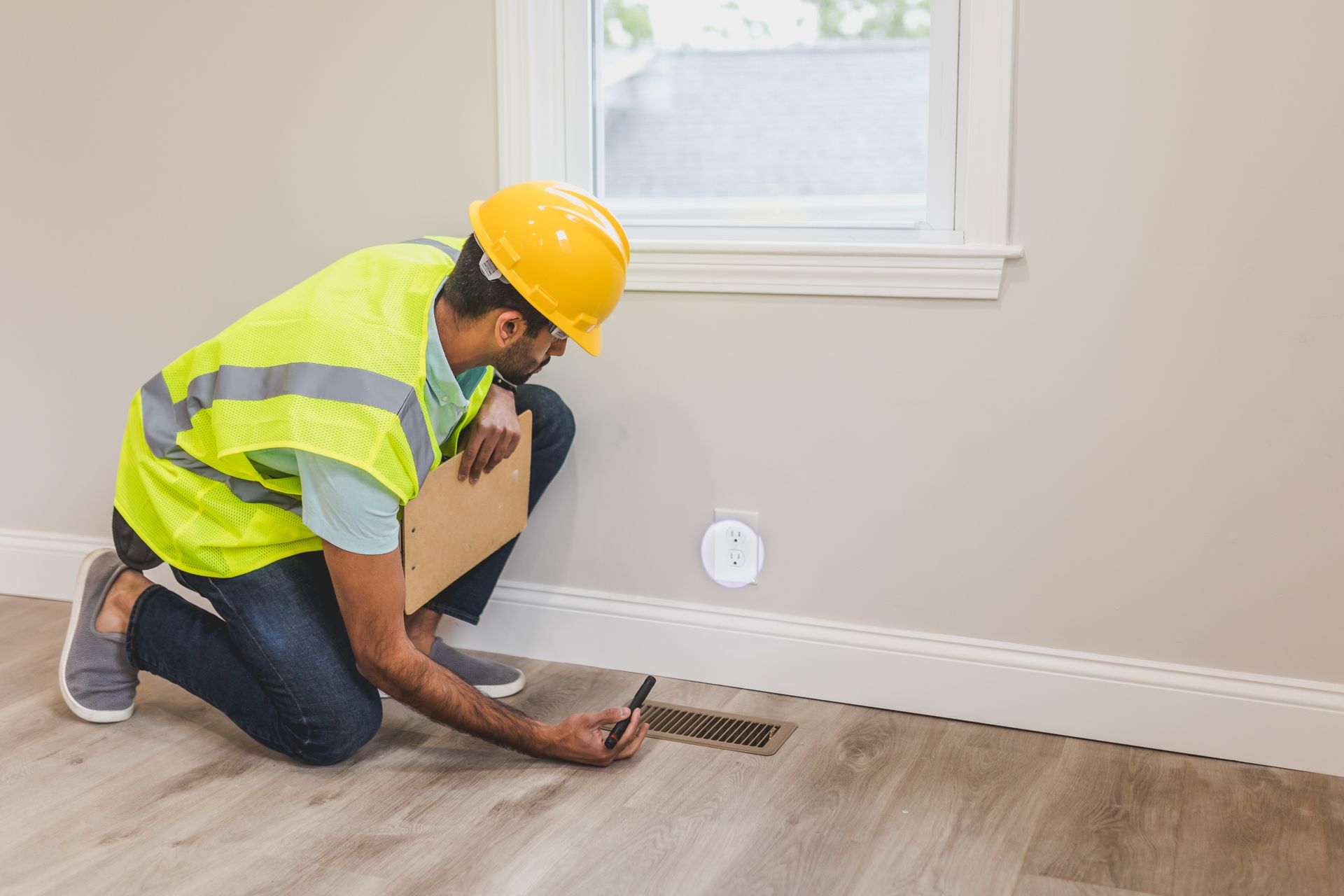
Hidden water causes the worst surprises. Thermal imaging reveals temperature differences caused by trapped moisture, and moisture meters confirm substrate readings. Additionally, ASTM E1105 water-spray testing helps trace where water enters.
Monitoring helps as well. Wint’s review of commercial real estate filings notes that a burst pipe caught within minutes does a fraction of the damage of one that runs for hours. Still, that review found only 33% of 101 filings describe any action to reduce water risk. That gap suggests many owners still wait for a stain.
Know When to Call Remediation Specialists
Small, clean-water events can fit an in-house response. Large events do not. EPA points readers to its commercial building remediation guide when water damage is extensive or mold covers more than 10 square feet. Furthermore, commercial remediation firms use large fans and dehumidifiers to dry buildings before mold takes hold. Porous materials add difficulty, because mold can fill their gaps and resist full removal.
Specialists contain and dry the area. A contractor then closes the loop. That work includes opening the assembly, correcting the detail that let water in, and rebuilding in sequence. Substrata coordinates that construction scope with remediation specialists so the repair fixes the source, not only the symptom.
Prevention Protects Building Performance and Longevity
Prevention costs less than repair. EPA notes that controlling moisture prevents building damage, saves money, and avoids health problems. Moreover, mold gradually destroys the materials it grows on.
Operations suffer too. A severe leak can force owners to close part of a building and lose rental income. Additionally, insurers may impose larger deductibles or exclude water coverage after repeated leaks. Strong commercial building moisture control therefore protects revenue as well as materials.
Effective commercial property maintenance follows a seasonal routine. Roofing contractors recommend checking drainage before the rainy season and after major storms. A practical pre-season list includes:
- Clear roof drains, scuppers, and valleys, then look for ponding after storms.
- Inspect flashing and sealants at penetrations, parapets, and skylights.
- Service HVAC condensate drains and confirm that pipe connections are tight.
- Replace aging supply hoses and review the age of water mains.
Substrata builds these checks into commercial renovation scopes so owners find weak points before the storm does.
Conclusion: Moisture Control Is a Construction Decision
Water enters through roofs, walls, foundations, plumbing, and HVAC. EPA’s message stays consistent: dry wet materials within 24 to 48 hours and fix the source. The fictional office never had to happen. Owners who invest in drainage, envelope details, and routine inspection avoid the smell, the shutdown, and the insurance fight.
Commercial building moisture control works when owners treat water as a design and maintenance problem rather than a surprise. Each system needs a plan. Detection needs to start early. Remediation needs specialists. Repairs need to reach the source. Substrata Construction applies that discipline to mold prevention construction and envelope work across Los Angeles.
Ready to protect your building from the inside out? Contact Substrata to discuss your project scope and how our commercial construction expertise delivers envelope and repair work built for long-term performance.