

For the past three years, LA commercial developers have carried one specific fear into every construction project: what will the rate environment look like when this thing stabilizes? Bridge loans dominated because they bought optionality. They let developers push the rate decision downstream. In 2026, that calculus is changing. Commercial real estate lending has evolved beyond the rebound stage and entered a more disciplined period. Rate stability has returned enough to make locking in a permanent rate today more attractive than gambling on a better one eighteen months from now. The construction to perm loan is the instrument that captures that certainty — and LA commercial financing is showing clear movement toward it. Substrata Construction executes projects across exactly these financing structures. Here is what developers need to understand before they choose.
The Appeal of Fixed-Rate: Cash Flow Certainty Over Optionality
The argument for bridge financing has always been optionality. Bridge loans give developers the flexibility to choose their permanent financing after stabilization — when the property has cash flow, when lenders are competing for a stabilized asset, when the rate environment might be better.

That argument rests on an assumption: that waiting will produce better conditions. The 2026 commercial lending environment challenges that assumption directly. The Federal Reserve held its federal funds target range at 3.5% to 3.75% as of June 2026. Furthermore, Freddie Mac’s July 2026 survey put the average 30-year fixed mortgage at 6.49%. These are not peak-cycle numbers. They are stabilized rates in a disciplined lending environment.
Consequently, developers who wait for meaningfully better permanent financing conditions face a specific risk. If inflation reaccelerates due to renewed stimulus, permanent loan rates could remain sticky. That is a 2027 problem that underwrites decisions today. A developer who locks a fixed rate construction loan now eliminates the uncertainty of where rates sit at certificate of occupancy — without giving up much on the current rate.
The Two-Close Risk Window
The two-close structure — construction loan first, permanent loan at stabilization — concentrates rate risk at the worst possible moment. On a two-close structure, the permanent loan rate lock only matters near completion. This shifts the entire risk window to the end of the build, right when schedule slip is most likely. A six-week delay in construction — from weather, labor shortages, or inspection backlogs — can push a rate lock into expiration. The developer then reprices permanent financing at whatever the market offers that week. That is the exposure a construction to perm loan eliminates entirely.
Construction-to-Perm Structures: Locking in the Take-Out
The construction to perm loan combines construction financing and permanent mortgage into one transaction. Single-closing transactions specify the terms of the permanent financing at the original closing. The construction loan automatically converts to a permanent long-term mortgage upon completion. The developer qualifies once, closes once, and pays one set of closing costs.
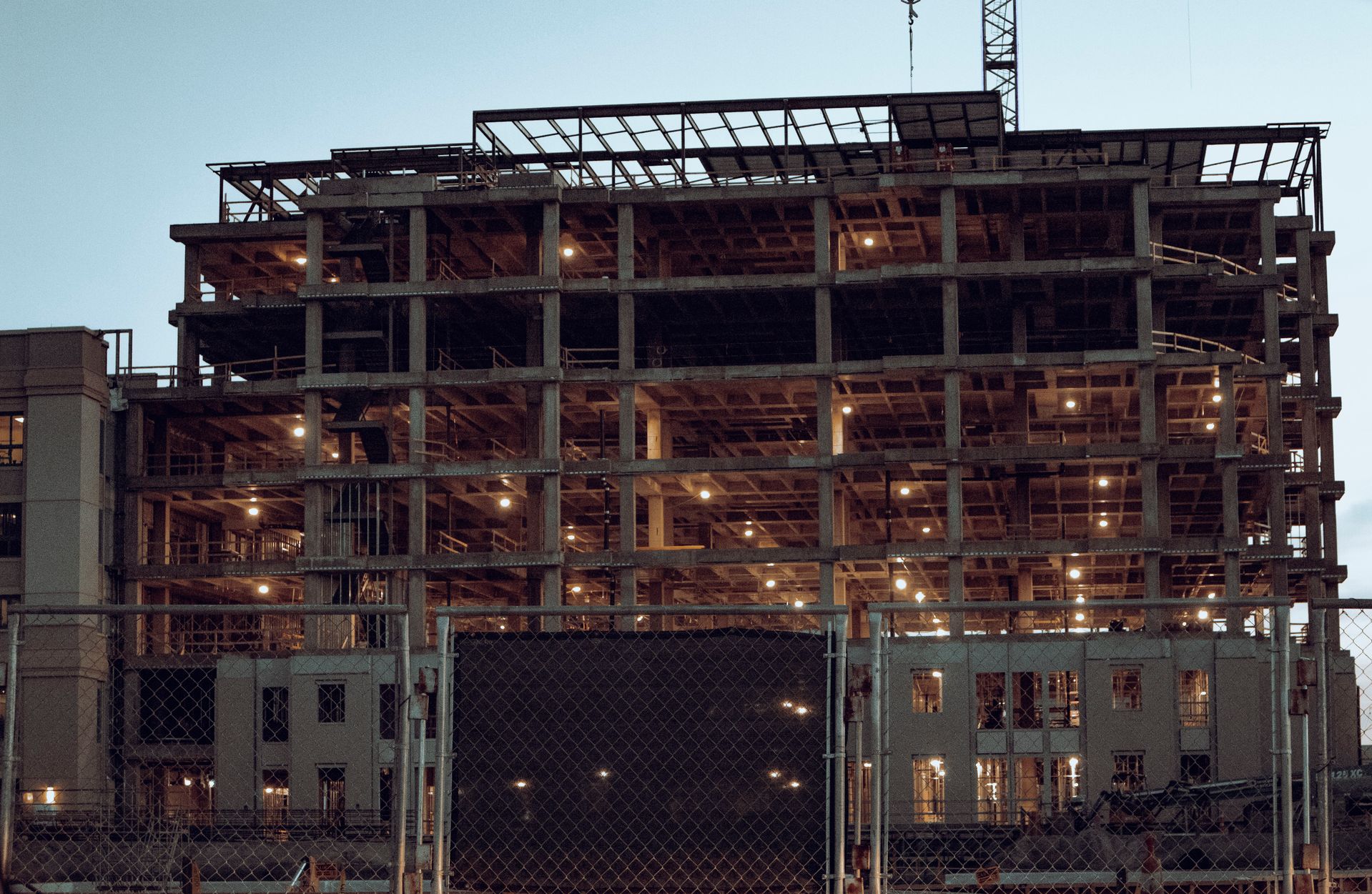
SouthState Correspondent’s analysis frames the core benefit precisely: the borrower locks the permanent rate before breaking ground, eliminating the single largest financial uncertainty. Furthermore, “with the permanent rate locked at closing, the take-out DSCR is underwritten on stabilized cash flow at a known debt service — not on a hoped-for rate environment one or two years out.”
What Single-Close Eliminates
Two-close development financing carries three distinct risk variables. Each disappears in the single-close structure.
- Rate risk: The permanent rate is fixed at construction closing — not at certificate of occupancy
- Requalification risk: No second underwriting process at stabilization. The developer’s financial profile cannot change the deal mid-build
- Closing cost duplication: Single-close saves $3,000 to $7,000 in duplicate closing costs on a typical transaction — and significantly more on large commercial projects
Additionally, the construction phase operates on an interest-only draw structure. Draws are released as construction milestones are verified. The fixed rate locked at construction close removes interest rate risk during the construction period — a meaningful concern given the SOFR movements of 2022–2023. At substantial completion, the loan converts automatically to a fully amortizing permanent mortgage.
For multifamily developers, HUD 221(d)(4) provides single-close construction-to-permanent financing with a 40-year permanent term and up to a three-year construction period. The absence of separate take-out underwriting means no refinancing risk at substantial completion. The 40-year fixed rate is also a material asset for eventual disposition — a future buyer or lender inherits a known, stable debt structure.
Lender Preferences: Why Portfolio Lenders Have the Edge
Not every lender can execute a construction to perm loan effectively. Execution requires a lender willing to hold the relationship across the full project duration — from construction closing through permanent conversion and beyond.

On a risk-adjusted return basis, a standalone construction loan produces roughly 3% RAROC. The same loan paired with a ten-year fully amortizing permanent take-out drives the average bank return to 15 to 18%. Portfolio lenders who hold both phases earn meaningfully more than those who originate construction loans and lose the borrower at stabilization.
Consequently, the incentive alignment between borrower and portfolio lender is genuine. The lender earns their best return when the project completes on schedule and converts cleanly to permanent. The borrower eliminates rate and requalification risk. Both parties benefit from the same outcome.
What Developers Should Ask Lenders
LA commercial financing decisions require asking the right questions before signing. The answers reveal whether a lender can actually execute the structure they are proposing.
- Is the permanent rate fixed at construction closing or at conversion?
- What is the extension cost if the construction timeline slips?
- How are construction draws released and on what verification schedule?
- What happens to the permanent rate structure if the project exceeds the initial loan amount?
On a two-close structure, the permanent loan lock only matters near completion — which is precisely when it is most likely to be unavailable on favorable terms. Developers who choose a single-close structure but work with a lender whose internal processes are effectively two-close get the paperwork of one deal with the risk exposure of two. Portfolio lenders who have originated and held construction-to-perm loans through full conversion cycles know this distinction from practice, not from a term sheet.
Conclusion: Waiting for Perfect Conditions Is an Expensive Decision
The strongest argument against the construction to perm loan has always been that locking a permanent rate today forfeits the possibility of a better rate tomorrow. That argument requires believing that rates will be materially lower at your certificate of occupancy than they are today. In the current LA commercial financing environment, that is a speculative bet — not a conservative financial strategy.
New commercial real estate loan originations surged 90% year-over-year through early 2025 as rates dropped and institutions reopened to the market. That window did not last. Developers who moved during it locked returns that subsequent entrants have not matched. The developer financing 2026 environment is not that window — but it is stable, it is accessible, and it is more predictable than any rate environment since 2021.
Substrata Construction builds projects inside these financing structures every time. Construction sequencing, draw schedules, and milestone documentation all interact directly with lender requirements. A construction team that does not understand how a construction to perm loan converts — and what documentation lenders require at each draw — creates friction that costs developers time and money at the worst possible moments.
Ready to execute a development project with a construction partner who understands how financing and building intersect? Contact Substrata to discuss your project scope and how our commercial construction expertise delivers projects built to convert cleanly to permanent financing.


